Who Actually Decides? Fixing the Authority Gap in US–Philippine Advisory Operations
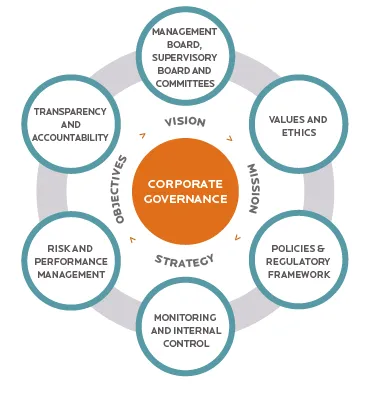
Photo: Asmi-corporatereporting.com, 2017, CC BY-SA 4.0, via Wikimedia Commons
The Org Chart Looks Fine — Until Something Goes Wrong
Every US executive who has launched a Philippine advisory operation has seen the same slide deck: headcount projections, cost savings, timeline to productivity. What rarely appears on those slides is a clear articulation of who holds authority over what decisions once the operation is live.
For the first few months, this ambiguity is easy to overlook. Teams are onboarding, workflows are new, and everyone defaults to checking with headquarters. But as the operation matures, that habit hardens into a structural problem. Local teams escalate decisions that should be resolved at the site level. Home office managers approve items that offshore advisors are better positioned to judge. And somewhere in the middle, accountability becomes diffuse enough that compliance gaps begin to form — quietly, and often without anyone recognizing the exposure until an audit or a client incident makes it visible.
This is not a failure of talent or commitment. It is a failure of governance design.
Why the Problem Is More Common Than It Appears
US companies entering the Philippine market typically focus their early governance energy on entity structure, tax registration, and local employment law. These are legitimate priorities. But they address the legal scaffolding of the operation, not the operational decision architecture that determines how the business actually runs day to day.
The result is what organizational design practitioners call a "decision-rights vacuum" — a condition in which authority is implied rather than explicit, distributed by seniority rather than function, and adjusted informally over time in ways that are never documented. In a domestic context, this vacuum is inconvenient. In a cross-border advisory context, it carries real consequences.
Consider a mid-market professional services firm that established a Philippine analytics team to support client deliverables. Within eighteen months, the team was producing high-quality work — but every client-facing output required sign-off from a US-based partner, regardless of complexity or urgency. The bottleneck wasn't capability. It was the absence of a defined approval threshold that would allow senior Philippine advisors to clear routine deliverables independently. The cost was measured not in dollars but in turnaround time, team morale, and client satisfaction scores.
The Compliance Dimension That Gets Underestimated
Decision-rights ambiguity is not only an operational inconvenience — it is a regulatory risk. US companies operating in the Philippines must navigate a dual compliance environment: Securities and Exchange Commission requirements on the Philippine side, alongside US obligations that may include Sarbanes-Oxley controls, HIPAA data governance standards, or sector-specific regulations depending on the industry.
When authority structures are unclear, compliance documentation suffers. Approval chains cannot be reliably reconstructed. Control testing fails to identify who, precisely, was responsible for a given authorization. In regulated industries — healthcare advisory, financial services, legal process support — this ambiguity can trigger findings that carry material consequences for the US parent entity.
Philippine regulatory authorities have also grown more attentive to how foreign companies structure operational authority within locally registered entities. Governance frameworks that concentrate all meaningful decision-making in the home office can raise questions about whether the Philippine entity is genuinely operational or merely a cost-reduction vehicle — a distinction that matters for tax treatment and business registration purposes.
Building a Decision-Rights Matrix That Actually Works
The practical solution is a decision-rights matrix: a structured document that maps categories of decisions to the appropriate authority level, whether that is the Philippine site lead, a joint review panel, or home office leadership. Effective matrices share several characteristics.
They are function-specific, not title-specific. Authority should attach to the role and its defined responsibilities, not to seniority alone. A Philippine engagement manager with deep subject matter expertise should hold approval rights over technical methodology questions, even if they report to a more senior US-based generalist.
They establish clear escalation thresholds. The matrix should define the conditions under which a decision moves up the chain — dollar value, client tier, regulatory implication — rather than leaving escalation to individual judgment.
They are reviewed on a defined cycle. As the Philippine operation matures and its capabilities expand, the appropriate authority distribution will shift. Organizations that treat the matrix as a living document, revisiting it annually or after significant operational changes, avoid the drift that causes governance frameworks to become obsolete.
They are built collaboratively. Matrices designed entirely by US leadership and handed down to Philippine teams tend to underperform. The most durable frameworks are developed through structured dialogue between home office stakeholders and Philippine site leads — a process that surfaces operational realities that headquarters is rarely positioned to anticipate.
What Leading Organizations Are Doing Differently
A technology services company with a Manila-based advisory team recently restructured its governance model after a post-acquisition integration review identified seventeen recurring decision types that were routinely escalated to the US despite having no genuine need for home office involvement. The company built a tiered authority framework that delegated twelve of those decision categories to the Philippine team outright, established joint review panels for three, and retained two at the US level with documented rationale.
The outcome was measurable: average escalation resolution time dropped by 60 percent, and the Philippine team's net promoter scores among internal clients improved significantly within two quarters. More importantly, the compliance audit conducted the following year found no control gaps attributable to authority ambiguity — a clean result that had not been achievable under the previous informal structure.
A healthcare advisory firm took a different approach, embedding decision-rights documentation directly into its standard operating procedures for each service line rather than maintaining a separate governance document. This integration ensured that authority expectations were visible at the point of execution, not just in a policy file that team members rarely consulted.
The Strategic Case for Getting This Right
There is a version of offshore advisory governance that treats the Philippine operation as an extension of the US business — capable and reliable, but fundamentally dependent on home office direction. There is another version that treats it as a genuine center of expertise with appropriate authority over its domain.
The companies extracting the most value from their Philippine advisory relationships have chosen the second model. They have recognized that the agility advantages of offshore advisory — faster execution, broader coverage, deeper specialization — are only fully realizable when the teams delivering that work are empowered to make decisions within clearly defined boundaries.
The hidden liability in most org charts is not a rogue process or a capability gap. It is the absence of a deliberate answer to a deceptively simple question: who decides? Companies that answer that question with precision — and document it in a governance framework built for cross-border complexity — are the ones turning their Philippine operations into genuine strategic assets rather than managed dependencies.