The Twelve-Hour Head Start: How US Professional Services Firms Are Winning Pitches With Manila's Night Shift

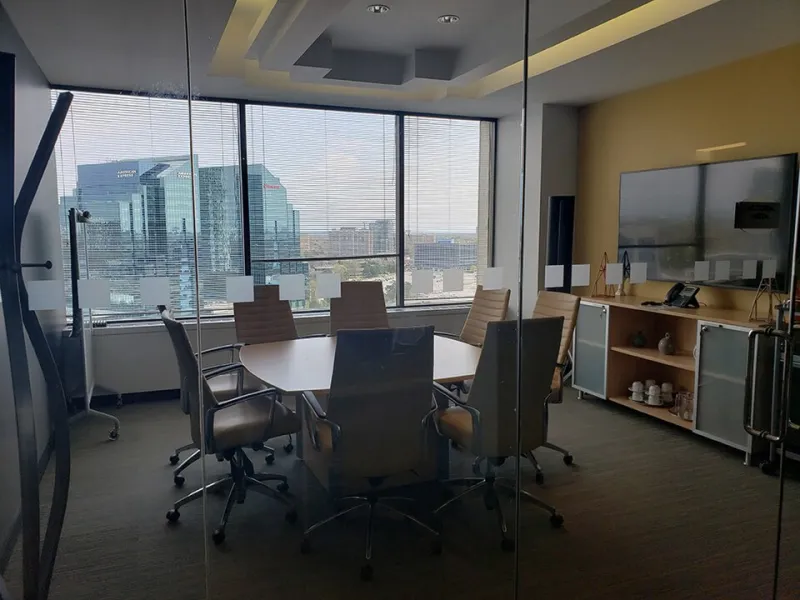
Photo: Yu Fujimoto, CC BY 2.0, via Wikimedia Commons
At 6:00 AM in New York, a partner at a mid-sized accounting firm opens her inbox to find a completed engagement deliverable — reconciled schedules, footnoted workpapers, a draft memo ready for partner review. Her competitor across town won't have that draft until Thursday. She has, in effect, been handed a twelve-hour head start, and she didn't pull a single late night to get it.
This is the quiet operational shift occurring across US professional services: litigation support, audit preparation, tax compliance, and document review are increasingly produced overnight by teams in Manila, then refined stateside by morning. For firms competing on both price and speed, the arrangement has moved from novel to near-essential.
Why the Clock Is the Product
Professional services firms sell two things: expertise and responsiveness. The first is hard to manufacture overnight. The second, it turns out, is a scheduling problem — and scheduling problems have elegant solutions.
The Philippines sits in a time zone that, for most US business hours, runs ahead by twelve to fifteen hours. A Manila analyst's 9:00 AM is roughly 8:00 PM in Chicago. That means work assigned at the end of an American workday is produced during what would otherwise be dead hours, and returned before US offices reopen. The result is a continuous production cycle: US teams review, refine, and client-face during the day; Manila teams produce, compile, and quality-check through the night.
For firms bidding on time-sensitive engagements — regulatory responses, due diligence deadlines, discovery cutoffs — the ability to promise a turnaround measured in hours rather than days is frequently the deciding factor in a pitch.
Anatomy of an Overnight Workflow
Consider a representative scenario: a US law firm faces a motion-filing deadline and needs a deposition summary, a document index, and a chronology of key events within eighteen hours.
Hour 0–2 (US afternoon): The supervising attorney finalizes scope, templates, and priorities. Instructions are written as if for someone who cannot ask a follow-up question — because, practically, they can't. Ambiguity is the enemy of overnight work.
Hour 2–12 (Manila morning to evening): A Philippine team of four — two reviewers, a quality checker, and a team lead — executes. Standardized templates, style guides, and precedent libraries remove guesswork. The team lead conducts interim quality checks at defined checkpoints rather than at the end.
Hour 12–16 (US early morning): Work lands in a shared workspace with a change log and exception notes — items the team flagged as unclear. US staff review against the original scope, resolve exceptions, and finalize.
Hour 16–18: The deliverable goes to the client, within the same window a purely domestic team would have needed just to start.
The workflow succeeds not because of heroics but because of design. Firms that fail at overnight models almost always fail at the handoff, not the work itself.
Structuring Quality Control Across the International Date Line
Time zone arbitrage without quality architecture is a liability. Firms that sustain these models tend to share several practices:
- Single-source instructions. Every overnight assignment travels with a written scope, a template, and named precedents. Verbal handoffs don't survive the time gap.
- Layered review, not terminal review. Quality checks occur mid-production, not merely at delivery, so errors are caught while correction is still cheap.
- Exception escalation protocols. Teams are trained to stop and flag rather than guess, with a defined escalation path that may include an on-call US contact during overlap hours.
- Metric discipline. Turnaround time, first-pass accuracy, and rework rates are tracked per engagement, per team — the same way a US firm would track billable realization.
- Continuity of staffing. Overnight work builds institutional knowledge only when the same teams handle the same practice areas repeatedly. Rotating ad hoc staffing erodes exactly the advantage the model creates.
Notably, the most successful adopters treat their Manila teams as an extension of the firm, not a vendor. Confidentiality infrastructure, conflict-checking procedures, and professional standards training are non-negotiable — particularly for law firms, where ethics rules on supervision of delegated work apply regardless of geography.
The Pitch Room Effect
The strategic payoff shows up in business development. When a firm can credibly commit to same-day turnarounds, weekend deliverables without weekend burnout, and pricing that reflects a blended cost base, its proposals read differently. Rivals compete on promises; the overnight model competes on demonstrated capacity.
Some firms now lead pitches with it explicitly: a mock deliverable produced overnight, delivered to the prospective client with the timeline attached. Few selling arguments are more persuasive than proof.
Getting Started Without Betting the Firm
Firms exploring this model should begin with a pilot: one practice area, one recurring deliverable type, one dedicated team. Tax season document preparation, litigation support summaries, and audit PBC follow-ups are common entry points because they are high-volume, template-driven, and deadline-rich.
Measure ruthlessly for the first two cycles. The first overnight deliverable will be slower than expected; the tenth should be routine. By the third month, the question usually shifts from "does this work?" to "which other workflows can we route through the night?"
The twelve-hour head start is available to any firm willing to redesign its day around someone else's morning. Increasingly, the firms winning the bids are the ones that already have.